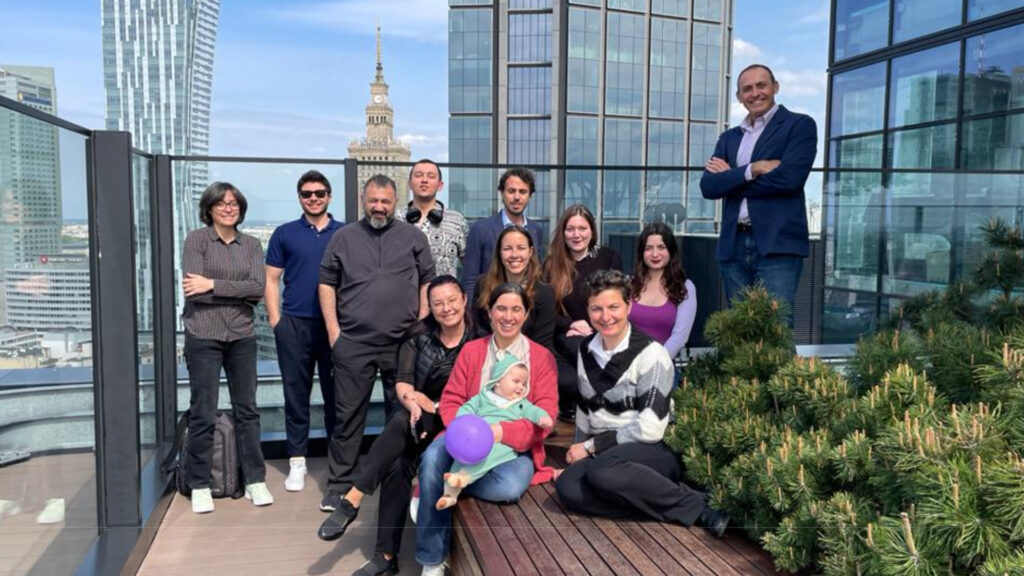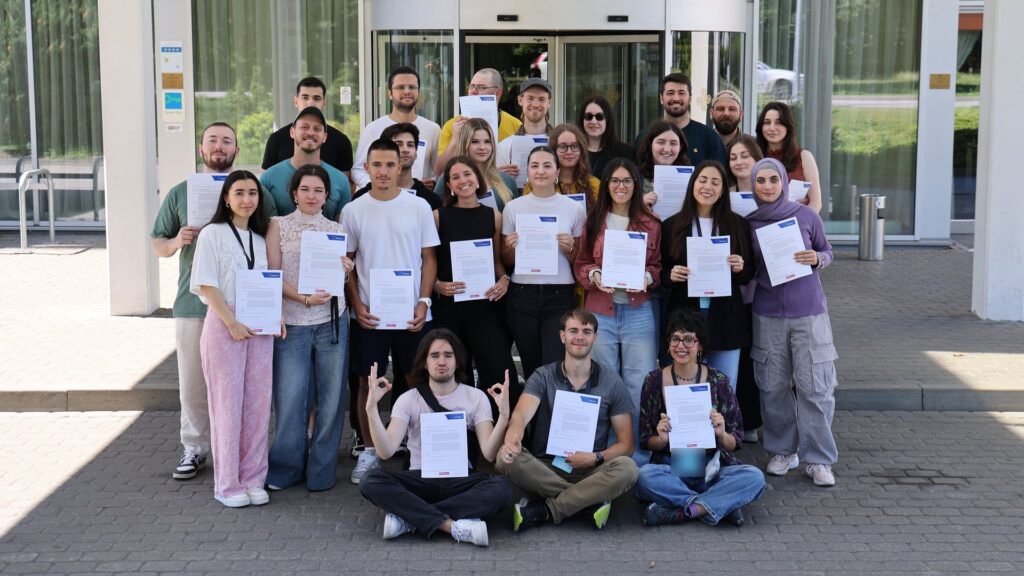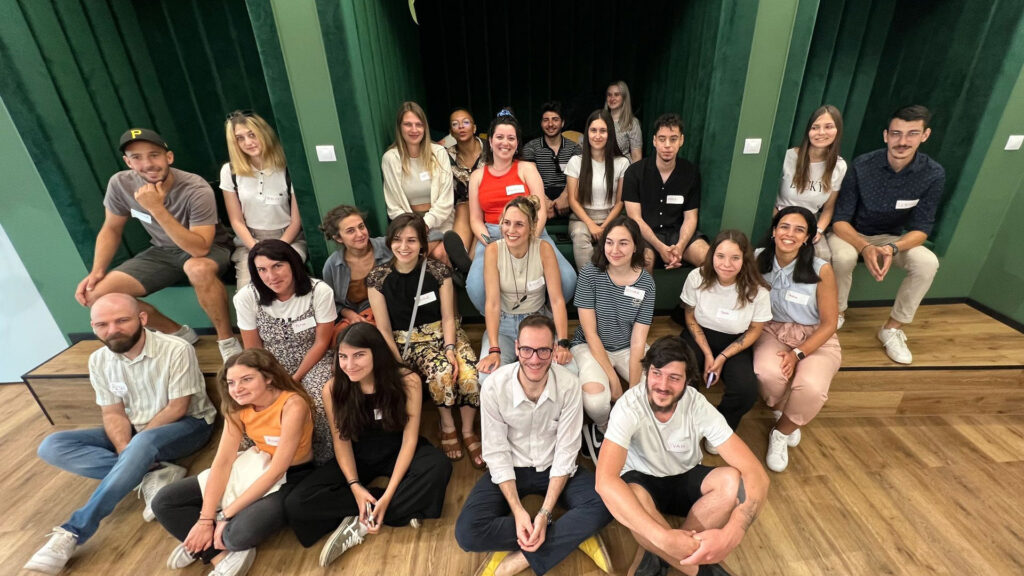

Consumo Justo timeline · Five local youth committees and four European online meetings · April 2025 – August 2026
Most tools of Consumo Justo, the Erasmus+ project about fair, ethical and local consumption, were written by youth workers for youth workers. One part was different: an action plan “by and for young people”, in which the young people themselves decided what should change and how. We coordinated that work.
Four meetings across five countries
Each partner formed a small local committee of young people, in France, Latvia, Norway, Poland and Spain. Between their local meetings, the committees met each other online four times.
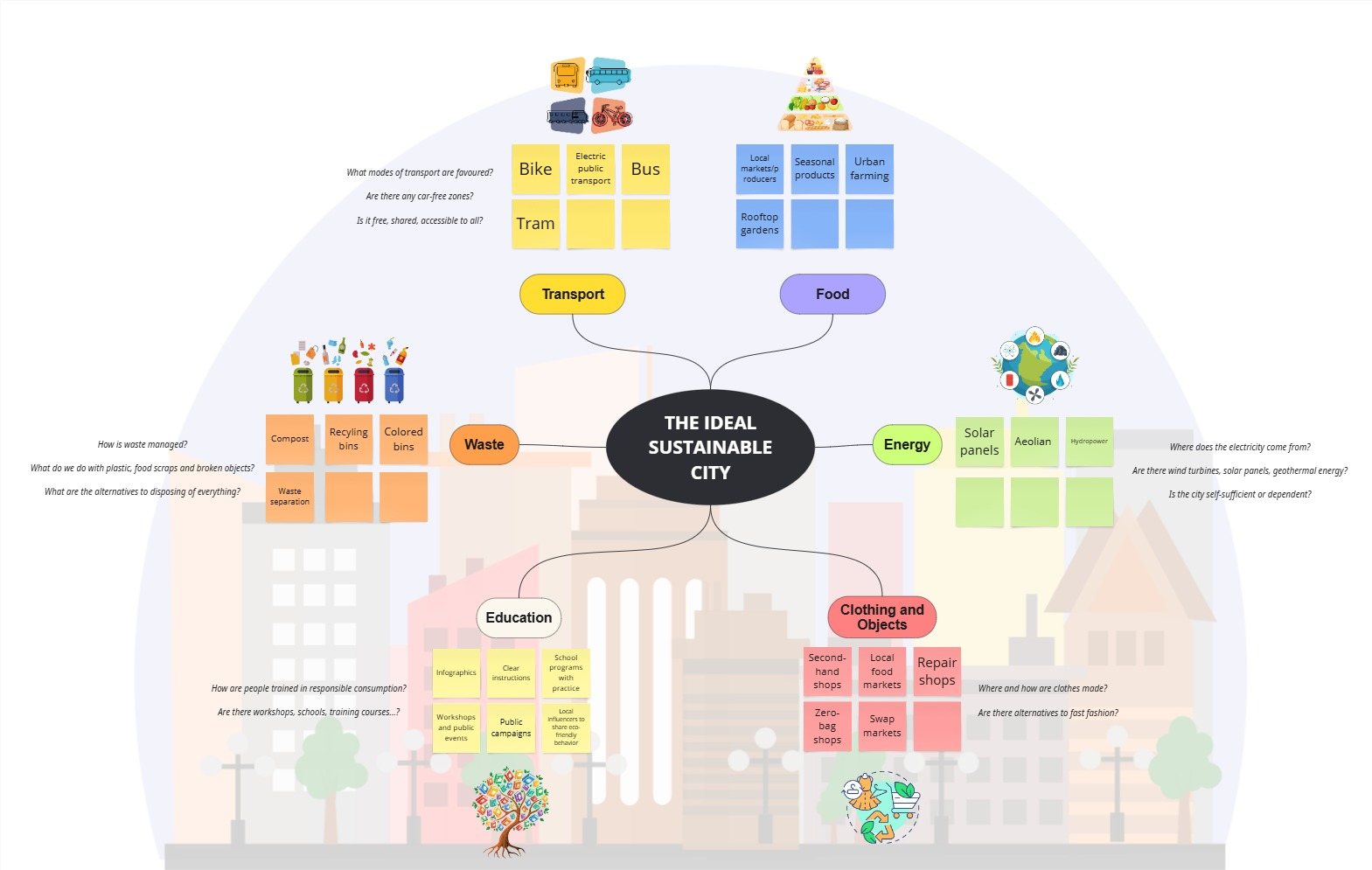
- 16 April 2025. They imagined an ideal sustainable city and compared their daily habits. Asked for one word about sustainability, the word they gave most often was “recycling”.
- 8 December 2025. They named what stops them from consuming responsibly. Three obstacles kept coming back: money, limited access and lack of information.
- 12 February 2026. Each country presented its first idea, and we introduced the guidelines for writing a local action plan.
- 11 June 2026. The five committees presented their finished plans to each other.
The guidelines we wrote asked every committee to think on three levels: what a person can do, what a community can do, and what needs to change in rules and institutions. Each plan had to fit in ten pages.
Five local plans
- France: Pontonx Sustainable Market. A village festival with second-hand exchange and local producers.
- Latvia: clothing swaps in Riga. A simple, repeatable alternative to buying new clothes.
- Spain: The Chain. A piece of participatory theatre about chocolate production and fair trade. It was performed in Pamplona on 10 June 2026, and the recording is online.
- Norway: Oslo Sustainable Action Days. Electronics repair, second-hand swapping and food redistribution.
- Poland: Bring Your Own Cup Day. A campaign in a university cafeteria.
Our youth team’s idea: bring your own cup
The youth team that worked with us started from something students do every day: buying coffee or tea in a disposable cup. Their proposal is a recurring campaign in which students who bring a reusable cup get a discount at the university cafeteria.
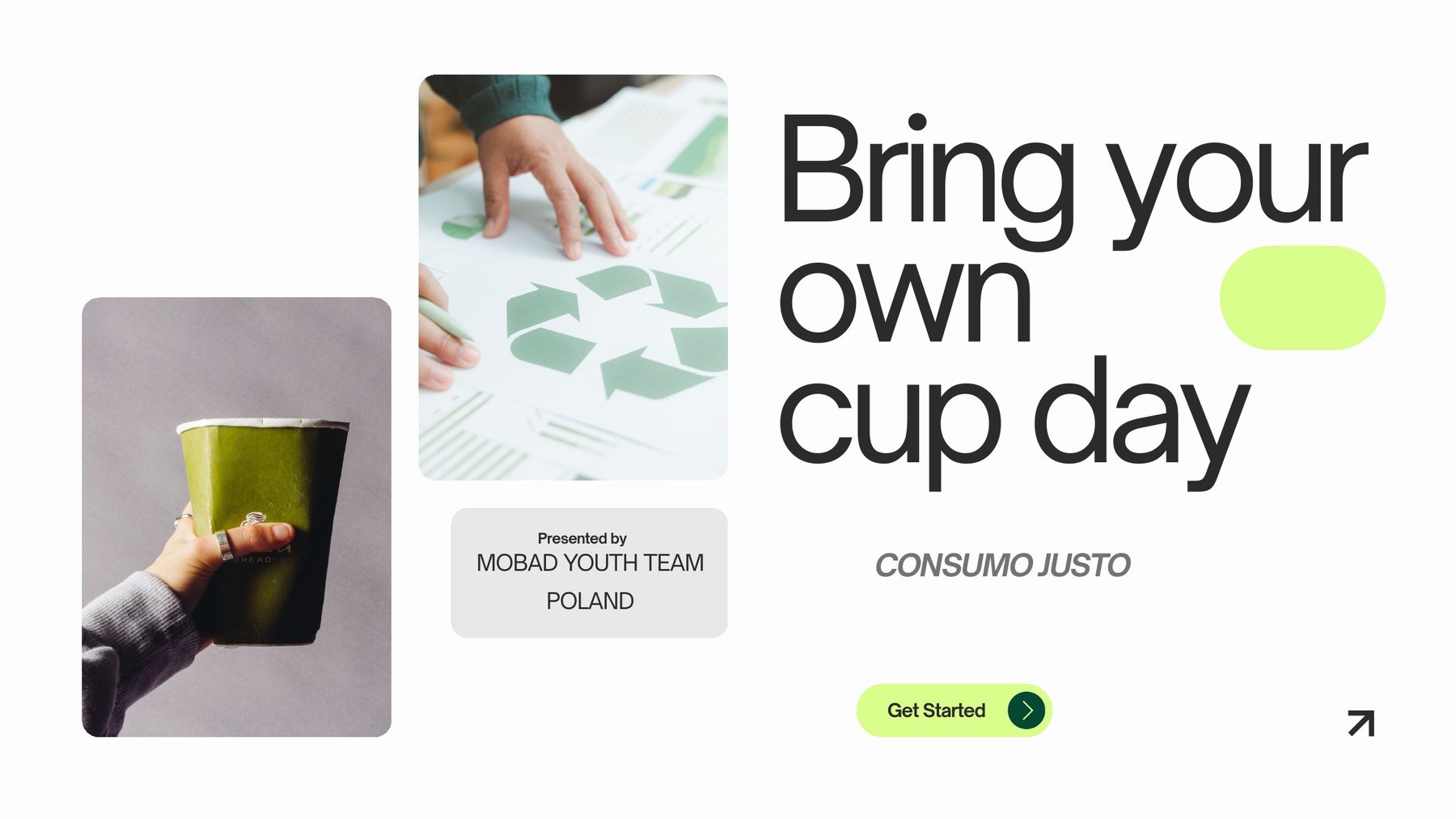
The plan has four steps, one per week: agree the discount with the cafeteria, announce the day on the university’s social media, put up posters at every till on the day itself, and count the cups to see whether it worked. The team set a first target of at least 50 students and suggested repeating the campaign monthly if students respond well. The team presented the plan to the other countries at the meeting on 11 June 2026. The campaign has not run yet: the next step is to agree the details with a university and its cafeteria. If your university or student organisation would like to host it, write to us.
One European plan
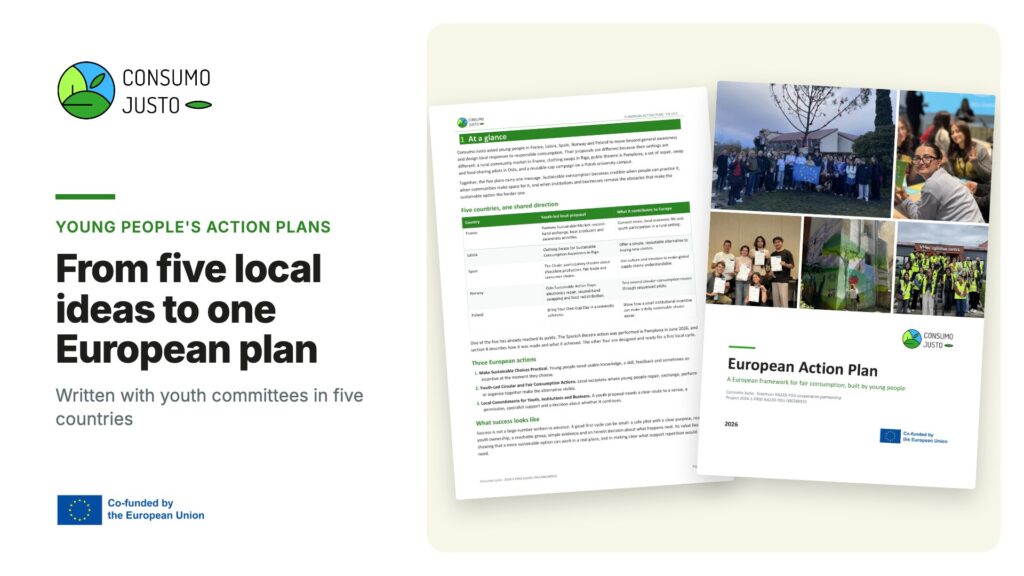
Our task was then to turn five local plans into one document. The partners approved its structure at their meeting in Warsaw in June 2026, a first version went to them at the beginning of August, and the final English edition is dated 19 August 2026.
The European Action Plan: A European framework for fair consumption, built by young people has 26 pages. It groups the five local ideas into three actions:
- Make sustainable choices practical. Young people need usable knowledge, a skill and sometimes an incentive at the moment they choose.
- Youth-led circular and fair consumption actions. Local occasions where young people repair, exchange, perform or organise together.
- Local commitments for youth, institutions and business. A youth proposal needs a venue, a permission and a decision about whether it continues.
The plan also gives recommendations to six groups: youth organisations, schools, local authorities, businesses, national authorities and European institutions. It ends with a six-step cycle for testing an idea on a small scale before asking anyone for a permanent commitment.
Read the plan
The partners have also translated the plan into French, Spanish, Latvian and Norwegian.
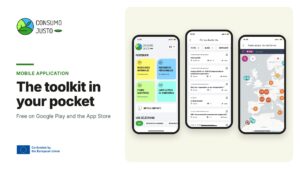
The Consumo Justo app, with the posters, activities and resources described in these posts, is free on Google Play and the App Store.
Consumo Justo is an Erasmus+ cooperation partnership in the field of youth (project 2024-1-FR02-KA220-YOU-000248910). Five organisations run it together: Maison de l’Europe des Landes WIPSEE (France, coordinator), SETEM Navarra (Spain), Collective Innovation (Norway), Ecological Future Education (Latvia) and Mobile Adventure (Poland). All posts and results are on our Consumo Justo project page.

Funded by the European Union. Views and opinions expressed are those of the authors only and do not necessarily reflect those of the European Union or the European Education and Culture Executive Agency (EACEA). Neither the European Union nor EACEA can be held responsible for them.
#ConsumoJustoYouth #EUConsumoJusto #ConsumoJustoErasmus