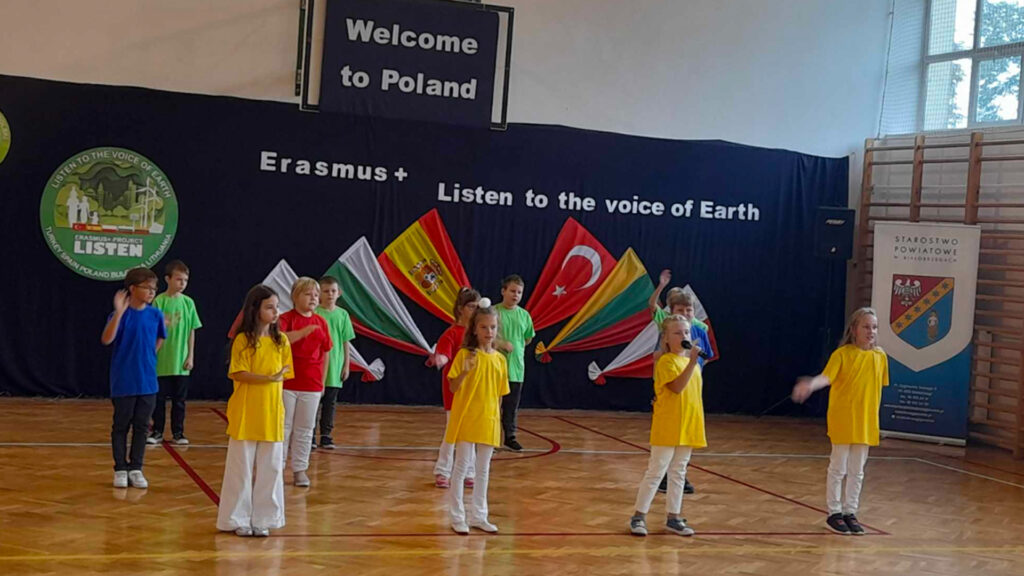

Consumo Justo timeline · Five partners, five activities each · December 2024 – April 2025
A youth worker who wants to spend an afternoon on responsible consumption needs more than good intentions. She needs an activity that fits her group, her room and the time she has. Consumo Justo, the Erasmus+ project on fair, ethical and local consumption, answers that need with 25 activity sheets. This part of the project’s toolkit was our responsibility.
One template for five partners
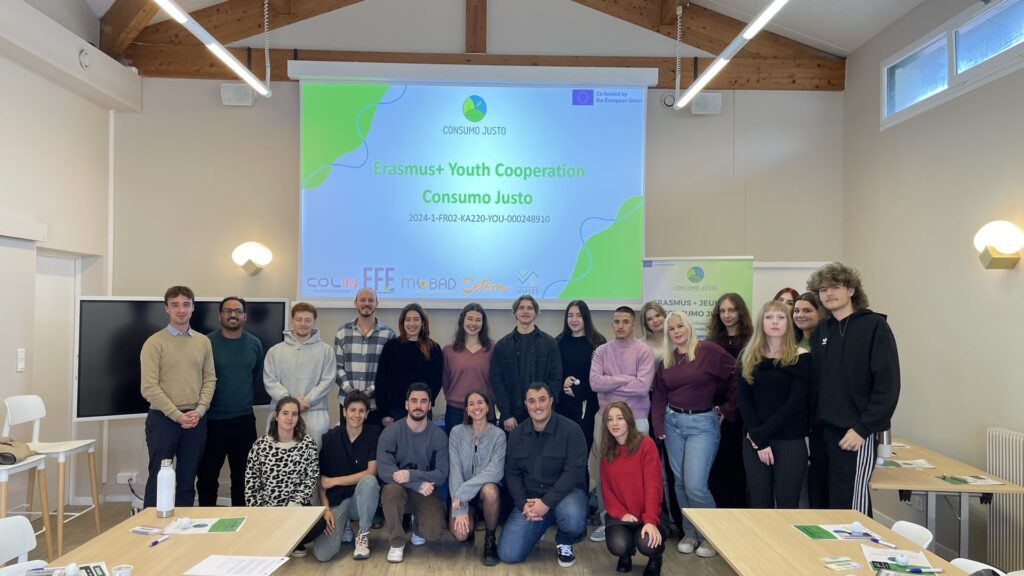
At the first partner meeting in Oslo in October 2024 we agreed on the rules. Each of the five partners would write five activities, and every activity had to be accessible, transferable and adaptable. For the format we took inspiration from Compass, the Council of Europe’s manual for human rights education with young people.
Our first job was the template, which we prepared at the end of 2024. Every sheet answers the same questions in the same order:
- the name and the goal of the activity
- how long it takes and how many people can take part
- the age of the participants
- whether it runs indoors or outdoors
- the materials needed
- a short description, followed by step-by-step instructions
The partners wrote their sheets in the first months of 2025, and the collection of 25 was complete in April 2025.
Our five activities
- Sustainability Quiz Challenge. Teams of two to five answer questions on energy, waste and responsible purchasing, and the facilitator explains each answer. 45 to 60 minutes, 10 to 30 people.
- Eco-Escape Room. Groups solve puzzles built from recycled materials, clue cards and locks before the timer runs out. 60 to 90 minutes, 6 to 15 people.
- Debate: “Is Minimalism Key to Responsible Consumption?” Two teams argue for and against, with a moderator and an audience. 60 minutes, 8 to 20 people.
- Trash to Treasure Workshop. Participants turn bottles, cardboard, cans and fabric scraps into something useful or decorative. One to two hours, 10 to 25 people.
- Responsible Consumption Role-Playing Game. Small groups receive role cards, such as consumer, manufacturer or environmentalist, and have to solve a consumption dilemma from that point of view. 45 to 60 minutes, 10 to 30 people.
All five are written for participants aged 15 to 30.
What the other partners wrote
The other twenty activities come from France, Spain, Norway and Latvia. Ecological Future Education contributed a sustainability bingo and a one-week responsible consumption challenge. Maison de l’Europe des Landes WIPSEE wrote “How long does my waste last?” and a role-playing game on the Sustainable Development Goals. SETEM Navarra built activities around fair trade chocolate and the supply chain of a pair of sneakers. Collective Innovation added, among others, a Local Market Challenge.
Tested with youth workers
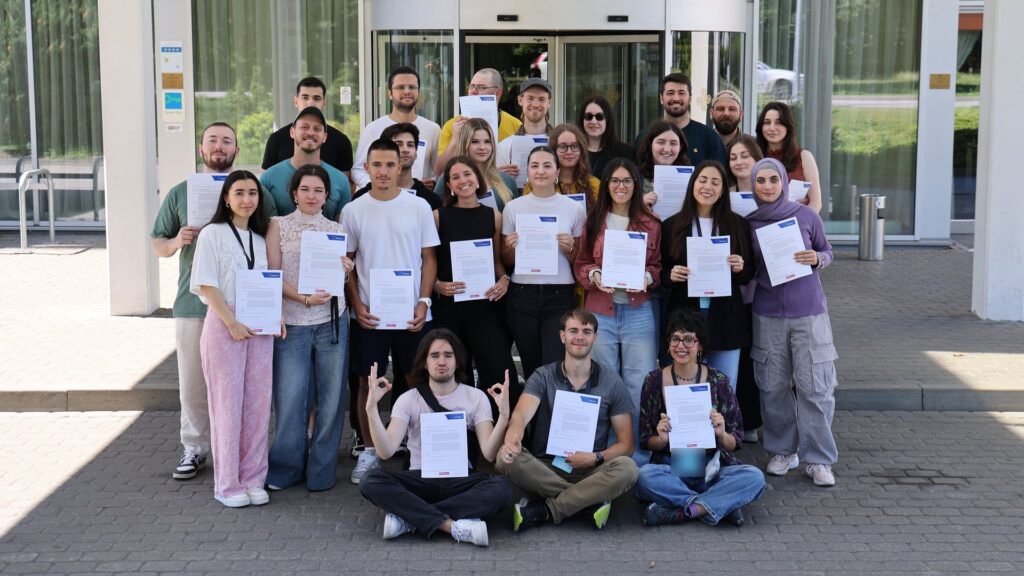
The sheets have since been used with real groups. At the project’s seminar in Dax, France, in November 2025, the programme for youth workers from the five countries included the minimalism debate and the role-playing game. Participants rated the debate 8.82 out of 10 and the role-playing game 8.05. The quiz “Eco-friendly or not?”, written by the Latvian partner, scored 8.95.
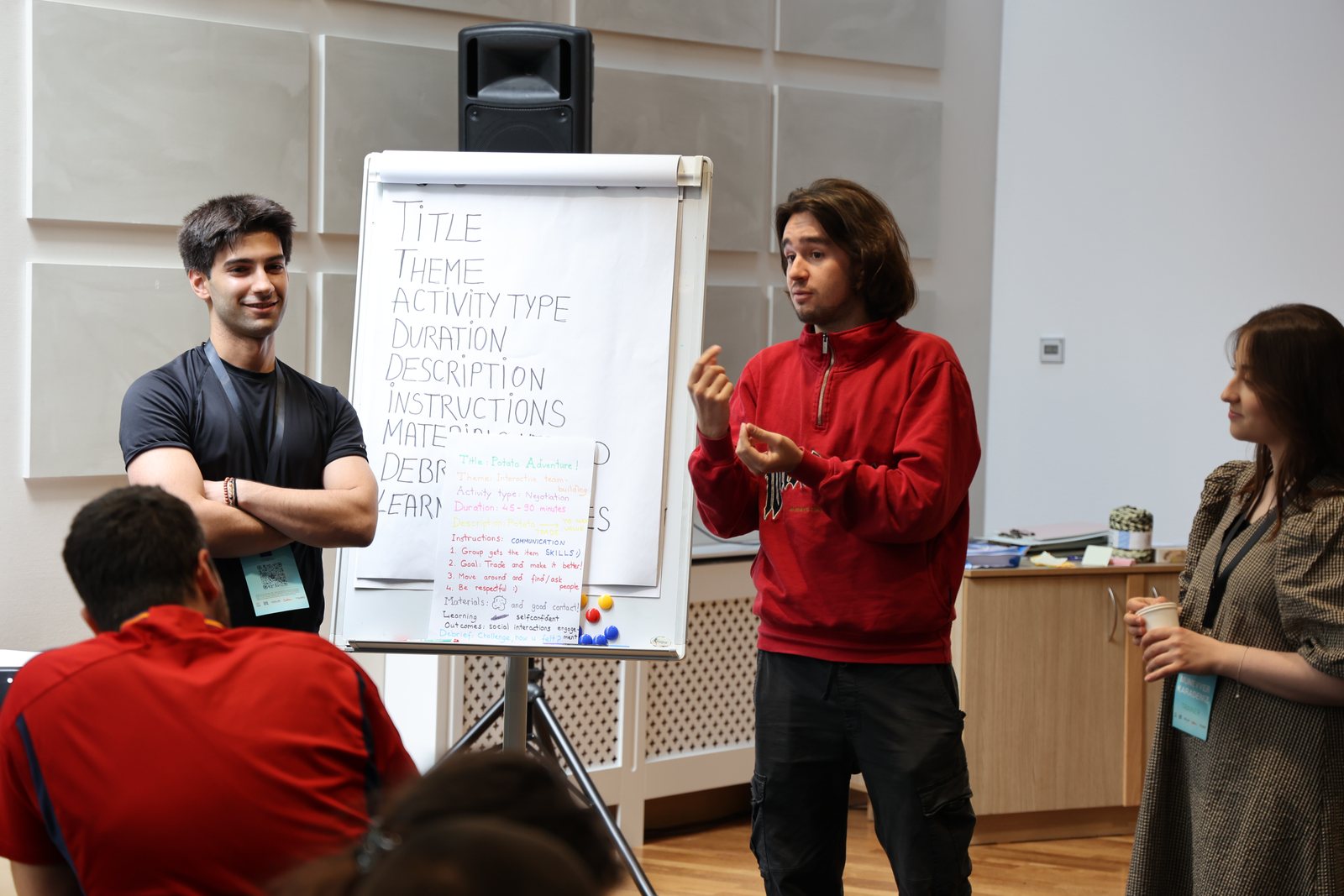
In June 2026, at the project’s five-day training in Riga, participants went one step further and designed activities of their own.
Where to find them
All 25 activities are in the Consumo Justo mobile app, where they can be filtered by theme, duration, difficulty and group size. The app is free on Google Play and the App Store.
Consumo Justo is an Erasmus+ cooperation partnership in the field of youth (project 2024-1-FR02-KA220-YOU-000248910). Five organisations run it together: Maison de l’Europe des Landes WIPSEE (France, coordinator), SETEM Navarra (Spain), Collective Innovation (Norway), Ecological Future Education (Latvia) and Mobile Adventure (Poland). All posts and results are on our Consumo Justo project page.

Funded by the European Union. Views and opinions expressed are those of the authors only and do not necessarily reflect those of the European Union or the European Education and Culture Executive Agency (EACEA). Neither the European Union nor EACEA can be held responsible for them.
#ConsumoJustoYouth #EUConsumoJusto #ConsumoJustoErasmus