
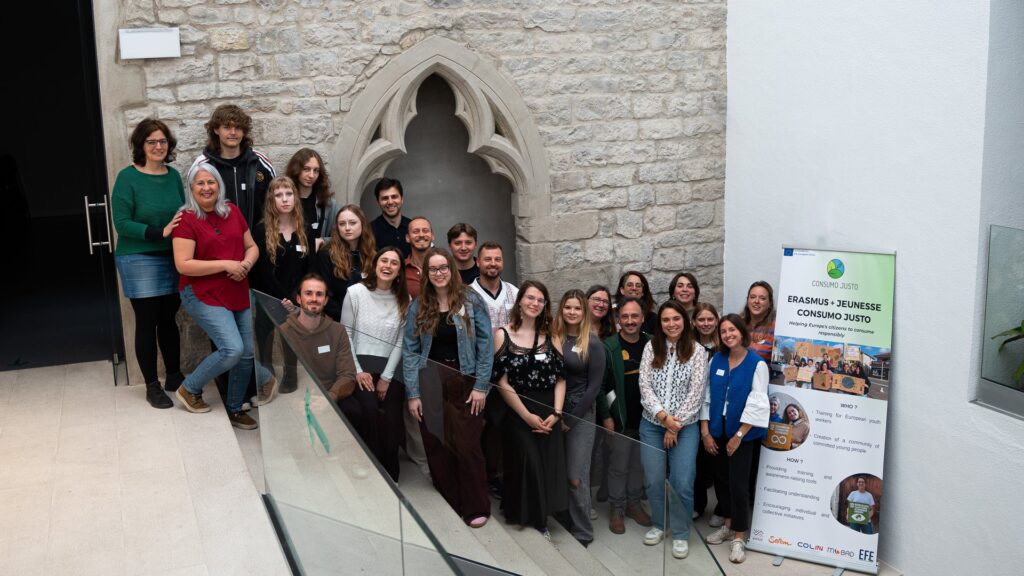
Consumo Justo timeline · Pamplona and Ollo, Spain · 22-24 May 2025
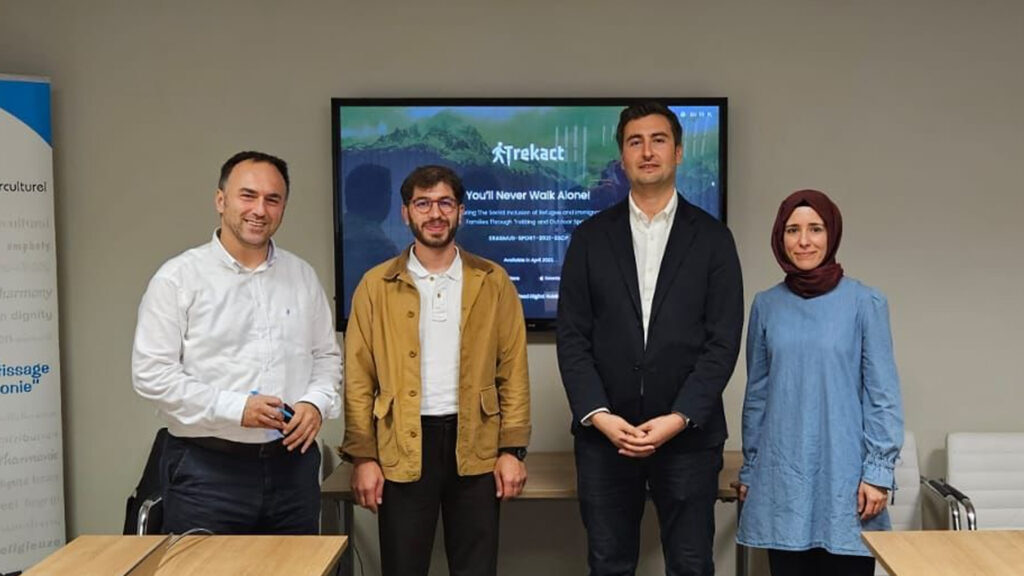
From 22 to 24 May 2025 SETEM Navarra hosted the first seminar of Consumo Justo, the Erasmus+ project on fair, ethical and local consumption. Youth workers and young people from France, Latvia, Norway, Poland and Spain took part, and Mobile Adventure was there with a group of five.
The seminar had one clear idea. Questions about consumption were always tied to something participants could taste, touch or visit.
Starting with a piece of chocolate
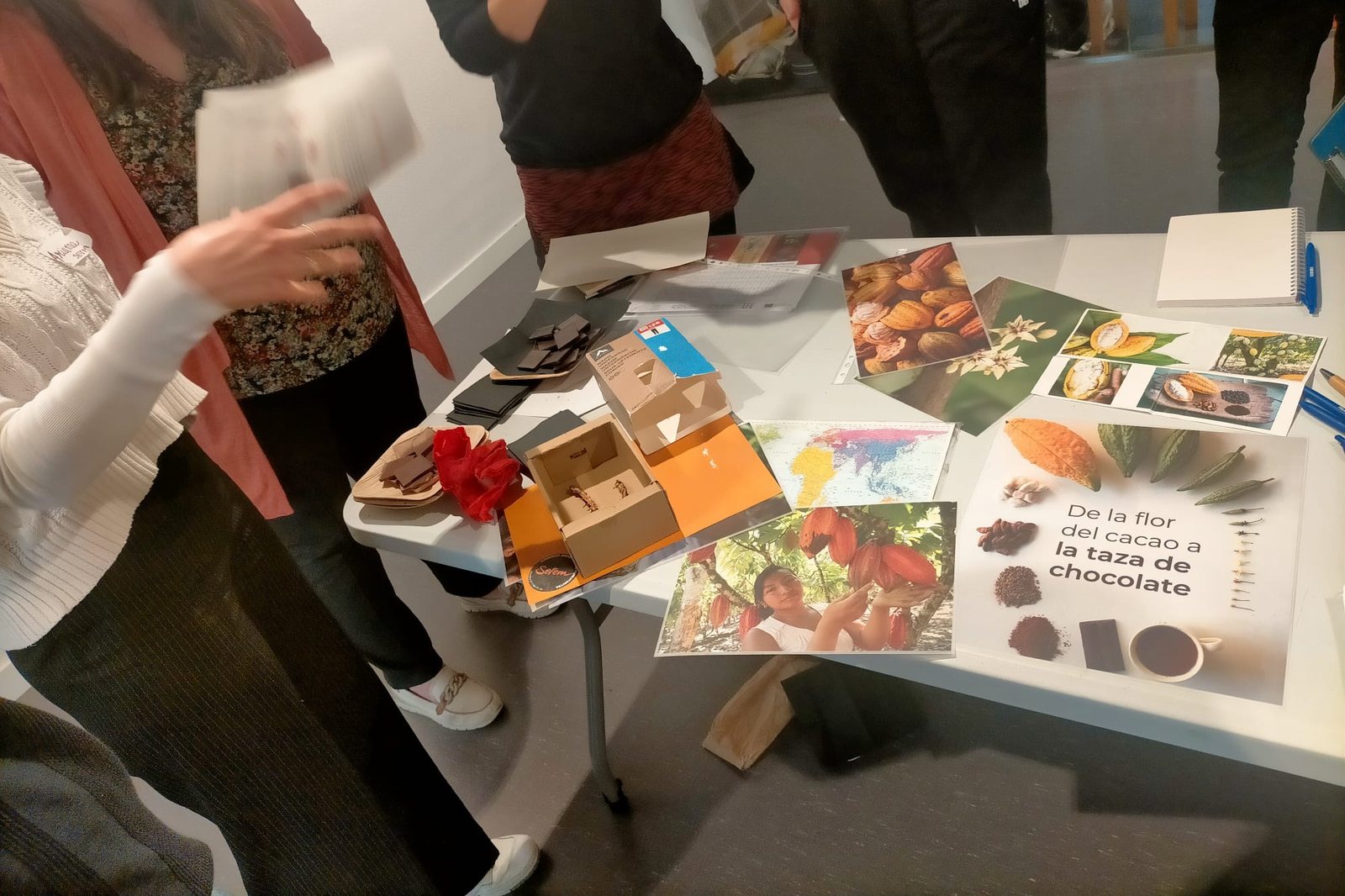
On the first day participants tasted two chocolates without knowing which was which and tried to guess the fair trade one. Taste turned out to be a poor guide, and that was the point of the exercise. Whether a product was made under fair conditions is not something you can taste. You have to ask where it comes from, who certified it and who was paid what. The tasting was the highest-rated activity of the seminar, with an average of 8.71 out of 10.
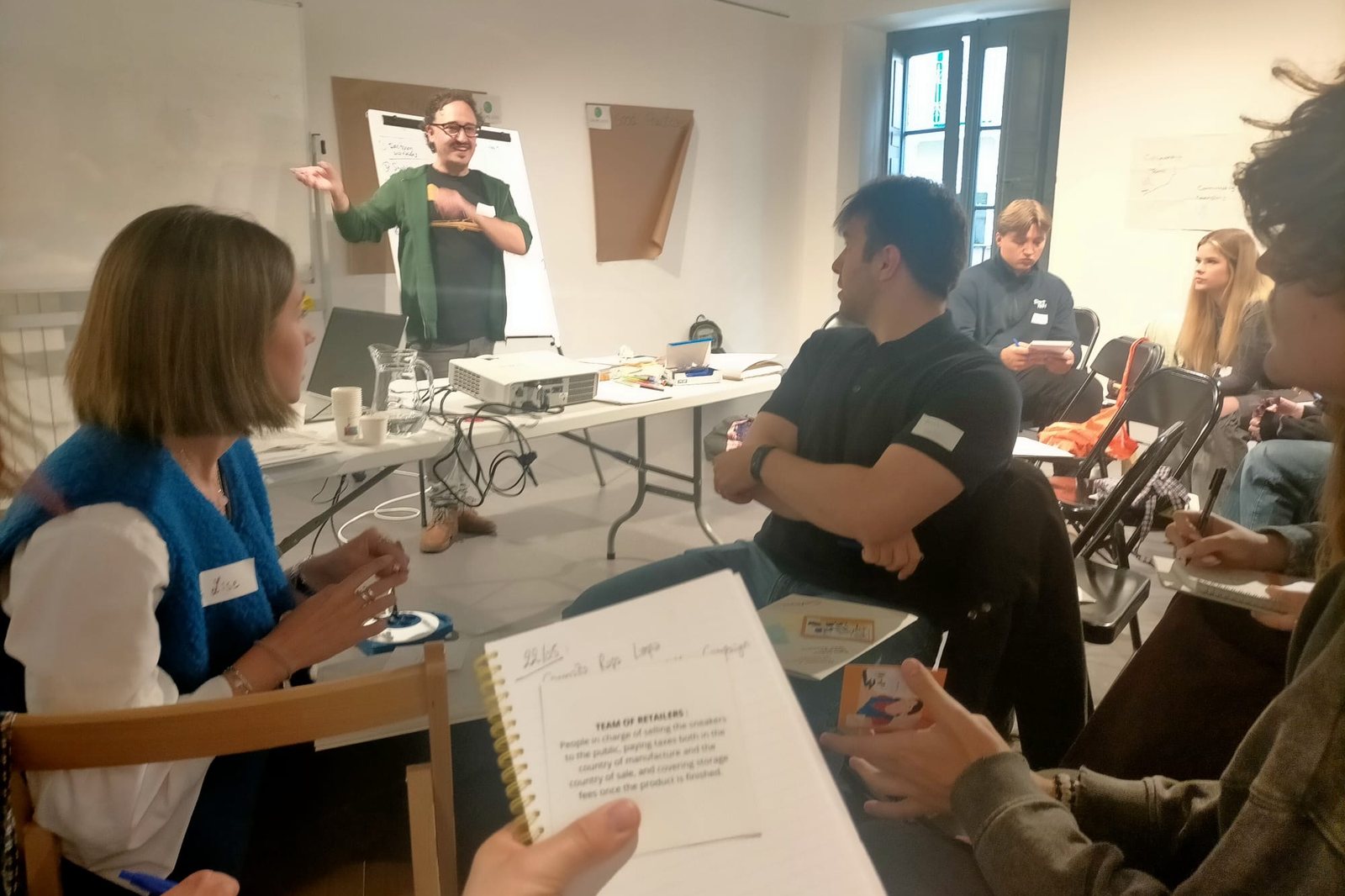
A second exercise, The Sneakers, asked groups to divide the shop price of a pair of shoes between the workers, the factory, the brand and the retailer, and then to imagine a fairer split.
Wool from Navarra
A local wool producer explained what it takes to keep wool production alive in Navarra and then taught the group to make a small woollen bowl. Working the material by hand says a lot about the time and skill behind a product that looks simple.
A neighbourhood as a classroom
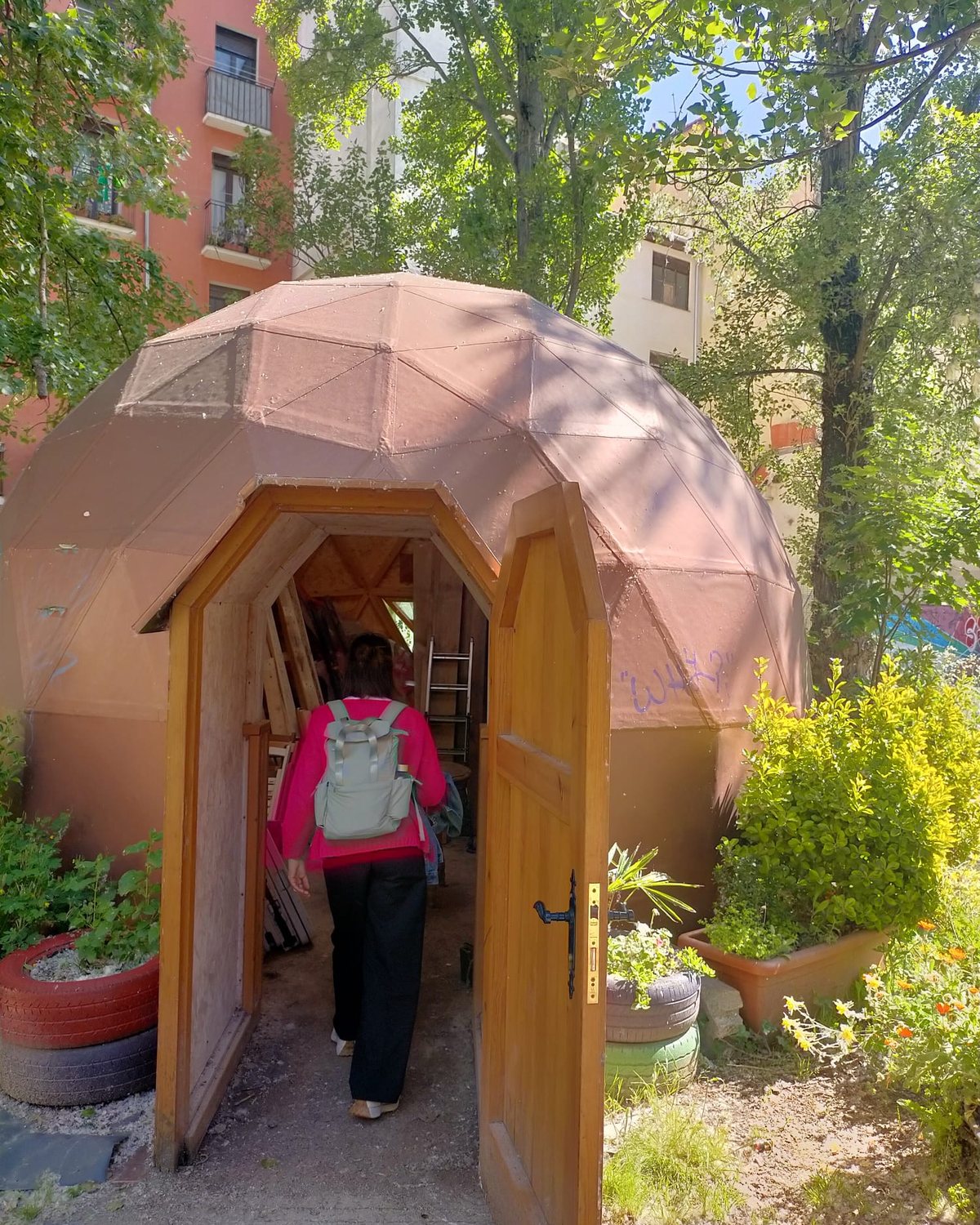
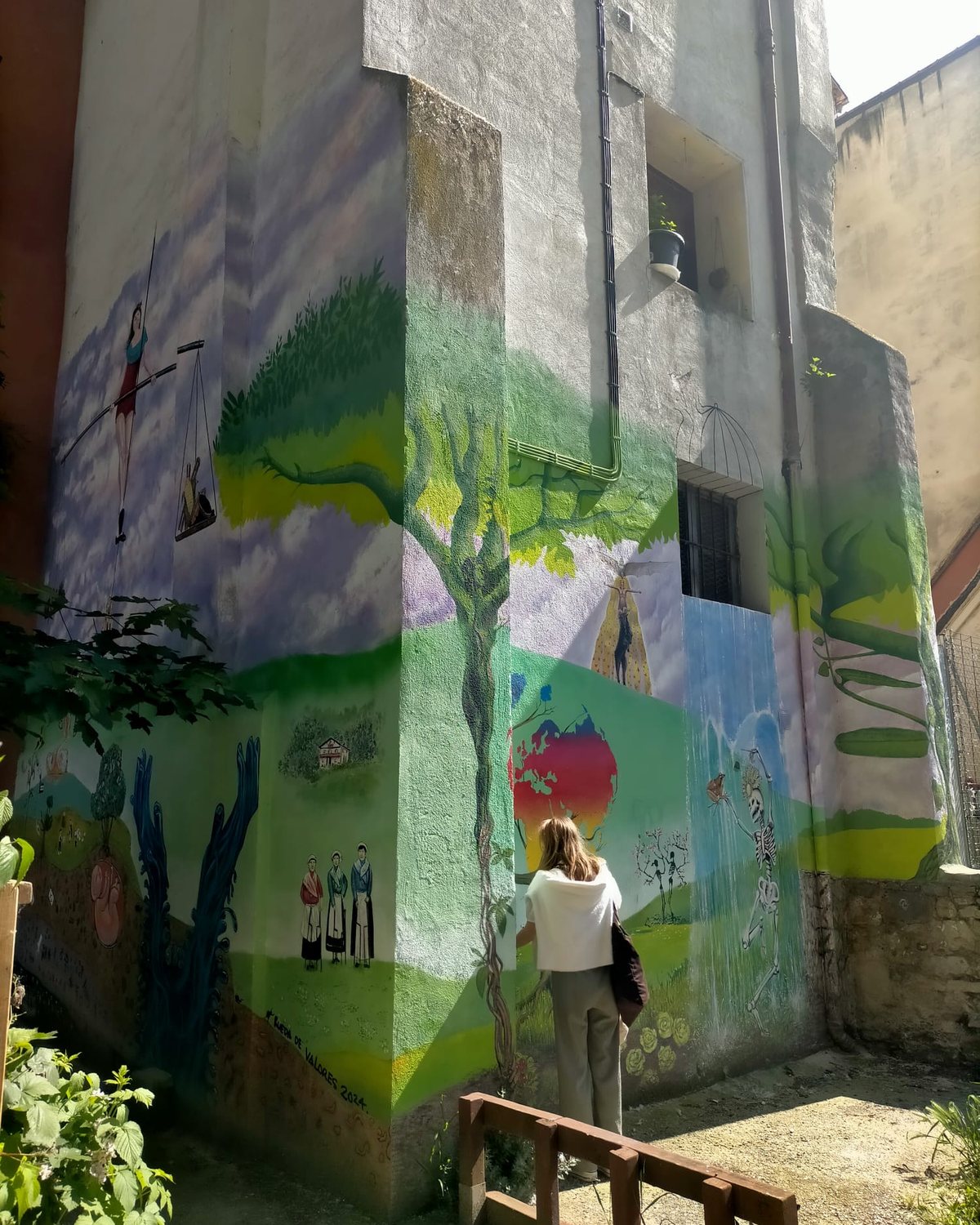
The second day was spent on foot. The group visited Geltoki, a shared space for food, culture and the solidarity economy, and Katakrak, a cooperative that runs a bookshop, a publishing house and a café. At Piparrika, an ecological urban garden looked after by its neighbours, participants learned about composting, crop rotation and local plant varieties. The walk also took in SETEM’s own fair trade shop and the murals of the neighbourhood.
At each stop the hosts explained how the place works: who owns it, who takes part and where the products come from. Seeing these places in operation made it easier to imagine what could be started at home.
Closing in the countryside
The last day took the group to Gure Sustraiak in Ollo, a cooperative farm-school that combines environmental education with social programmes open to people with disabilities. The seminar closed with two simple methods. Participants wrote a collective “recipe” for responsible consumption, and they passed a ball of wool from hand to hand until it formed a web connecting the whole group.
One participant wrote afterwards: “These three days left such a great impact on me. I am shocked by how much can be learnt in just three days.”
What we took home
The lesson we took from Pamplona is a practical one: an object opens the conversation, and the questions asked afterwards do the teaching. The seminar was also where the interviews for the project’s podcast were recorded. Six months later the same group of partners met again in Dax, France, for the second seminar.
The Consumo Justo app, with the posters, activities and resources described in these posts, is free on Google Play and the App Store.
Consumo Justo is an Erasmus+ cooperation partnership in the field of youth (project 2024-1-FR02-KA220-YOU-000248910). Five organisations run it together: Maison de l’Europe des Landes WIPSEE (France, coordinator), SETEM Navarra (Spain), Collective Innovation (Norway), Ecological Future Education (Latvia) and Mobile Adventure (Poland). All posts and results are on our Consumo Justo project page.

Funded by the European Union. Views and opinions expressed are those of the authors only and do not necessarily reflect those of the European Union or the European Education and Culture Executive Agency (EACEA). Neither the European Union nor EACEA can be held responsible for them.
#ConsumoJustoYouth #EUConsumoJusto #ConsumoJustoErasmus