
Consumo Justo timeline · Dax and Pontonx-sur-l'Adour, France · 19-22 November 2025
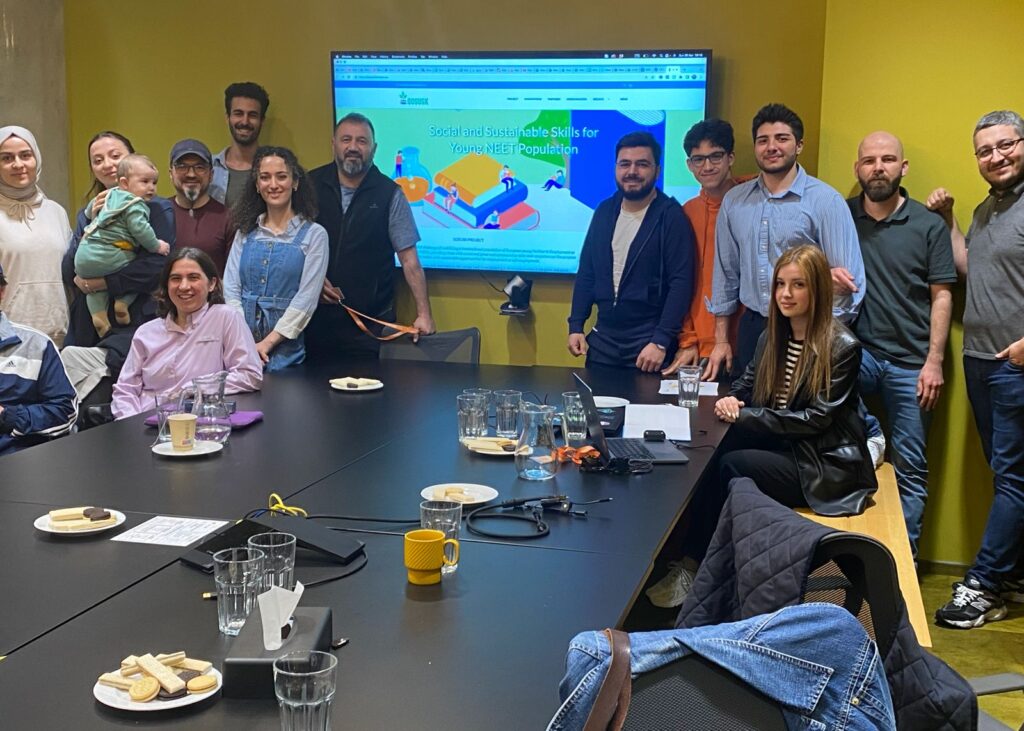
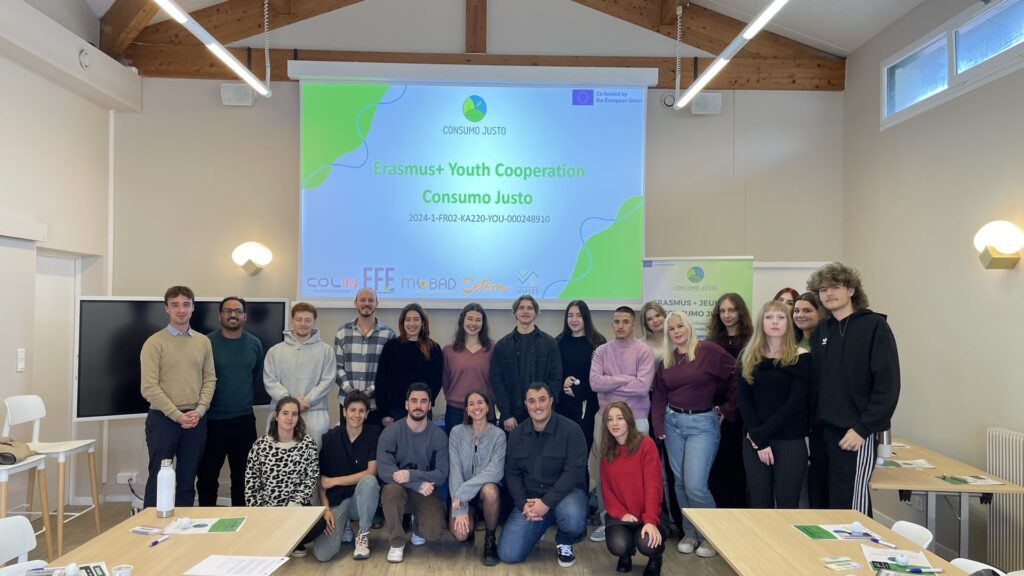
The second seminar of Consumo Justo, the Erasmus+ project on fair, ethical and local consumption, took place in Dax, in the Landes region of France, from 20 to 22 November 2025. Maison de l’Europe des Landes WIPSEE, the project coordinator, hosted 25 participants from France, Latvia, Norway, Poland and Spain. Mobile Adventure took part with a group of four.
A partner meeting the day before
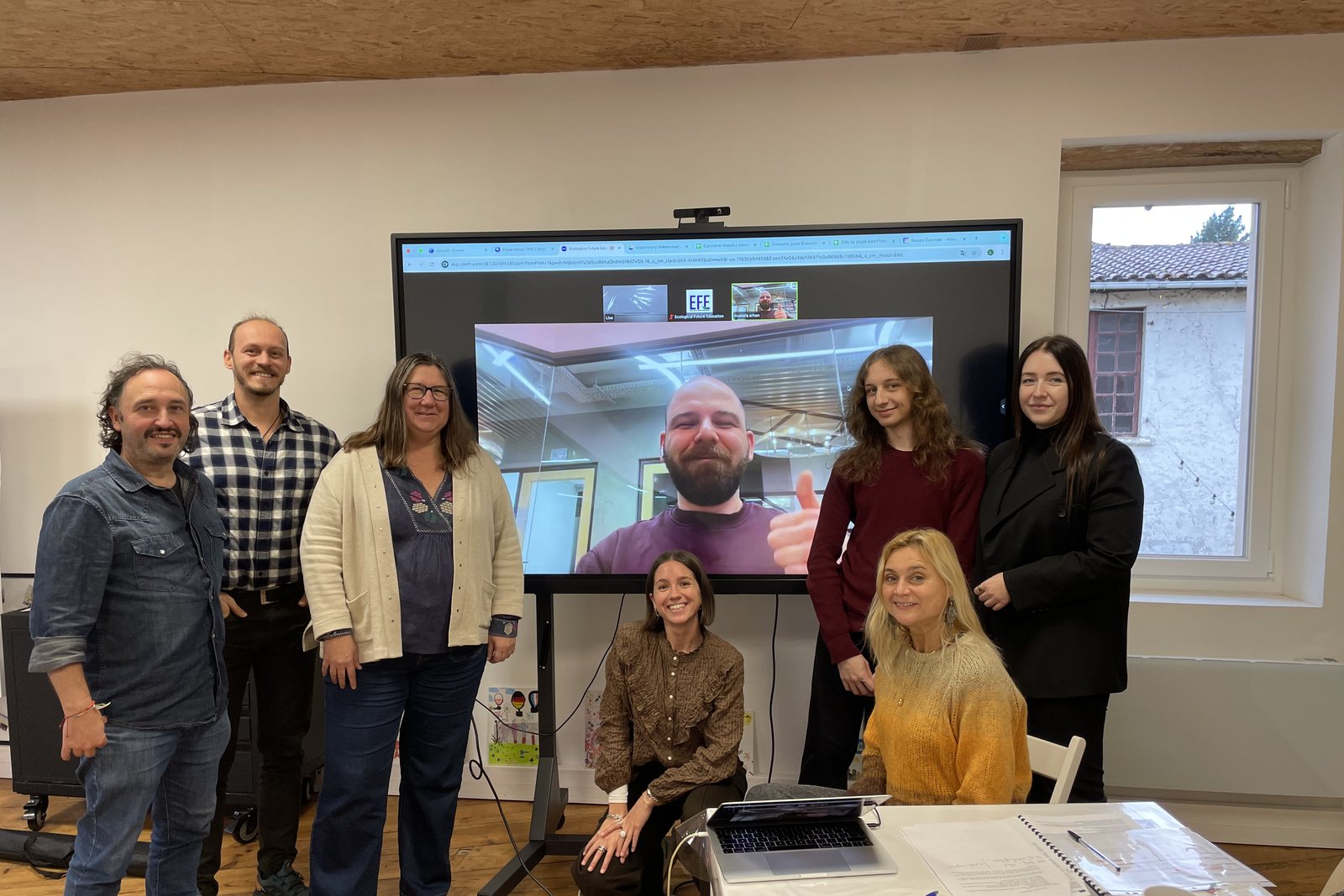
On 19 November the five partner organisations met in Pontonx-sur-l’Adour, where the coordinator has its office. The main news was that the project’s mobile app was ready to download. The partners also fixed the rest of the calendar. A five-day training would take place in Riga in June 2026 and a last partner meeting in Warsaw on 4 and 5 June 2026. Young people in each country would write a local action plan by the end of May 2026. We took on two tasks from that meeting: writing the guidelines for those local plans and combining them into one European action plan.
The app in participants’ hands
The seminar opened with a presentation of the first available version of the Consumo Justo app. Participants downloaded it on the spot, used it during the three days and gave their comments to the partners. Testing a tool inside a seminar gives better feedback than a demonstration, because people use it for a purpose.
Local people, local stories
Two divers presented Golf Anaiak. They recover golf balls from the lakes of driving ranges, clean them and sell them again for 50 to 70 percent less than new ones. Golf is popular in the Landes, so the example was close to home, and it showed how one small object can start a conversation about waste.
The afternoon was spent at an agricultural high school. Students showed videos they had made about what responsible, local, ethical and fair consumption mean to them, and then introduced the visitors to the traditions and sports of the Landes.
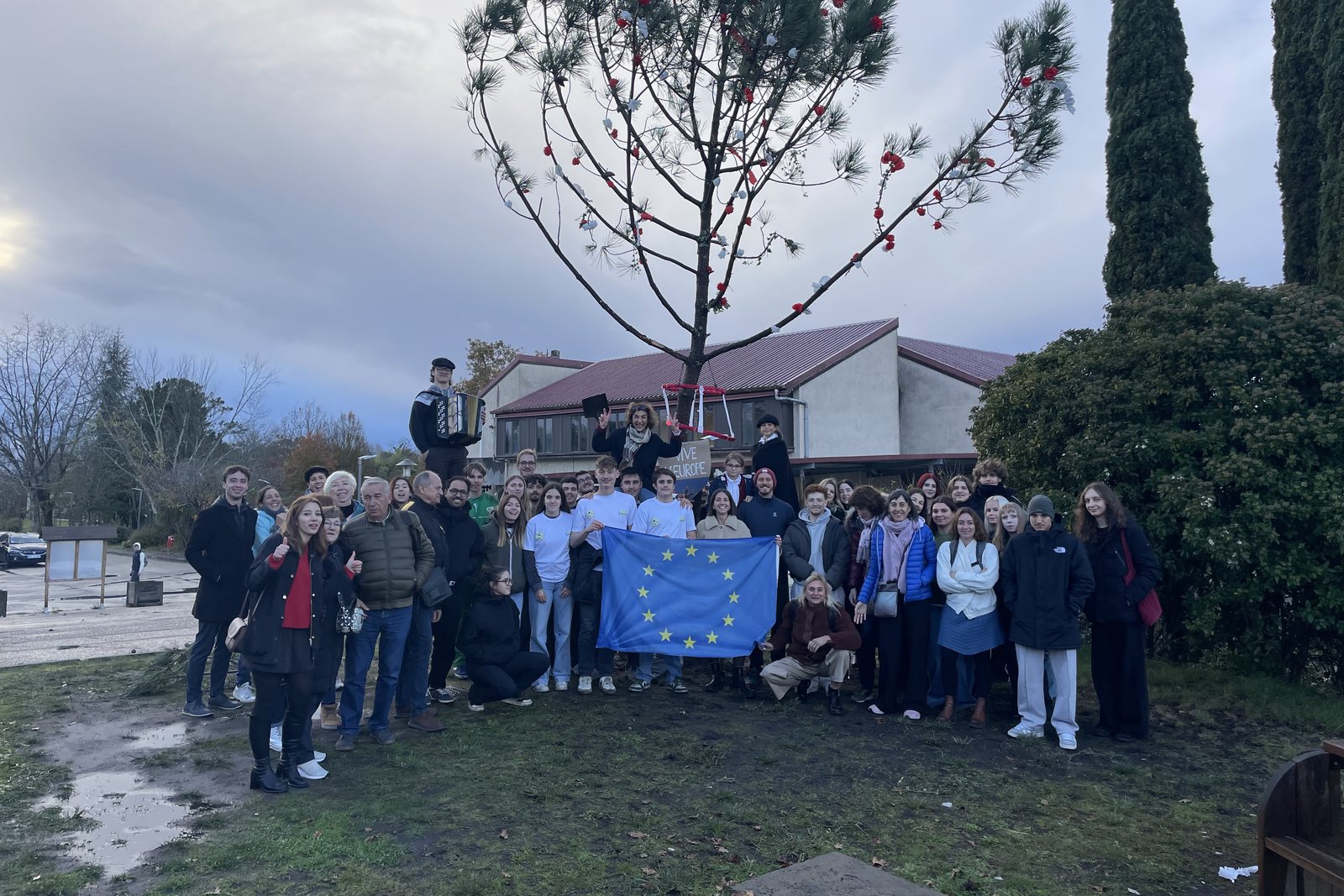
The next morning began at Café Terra, a village café created by the association Permaps so that residents have a place to meet and eat local food.
Methods on trial
The second day tested four methods in a row.
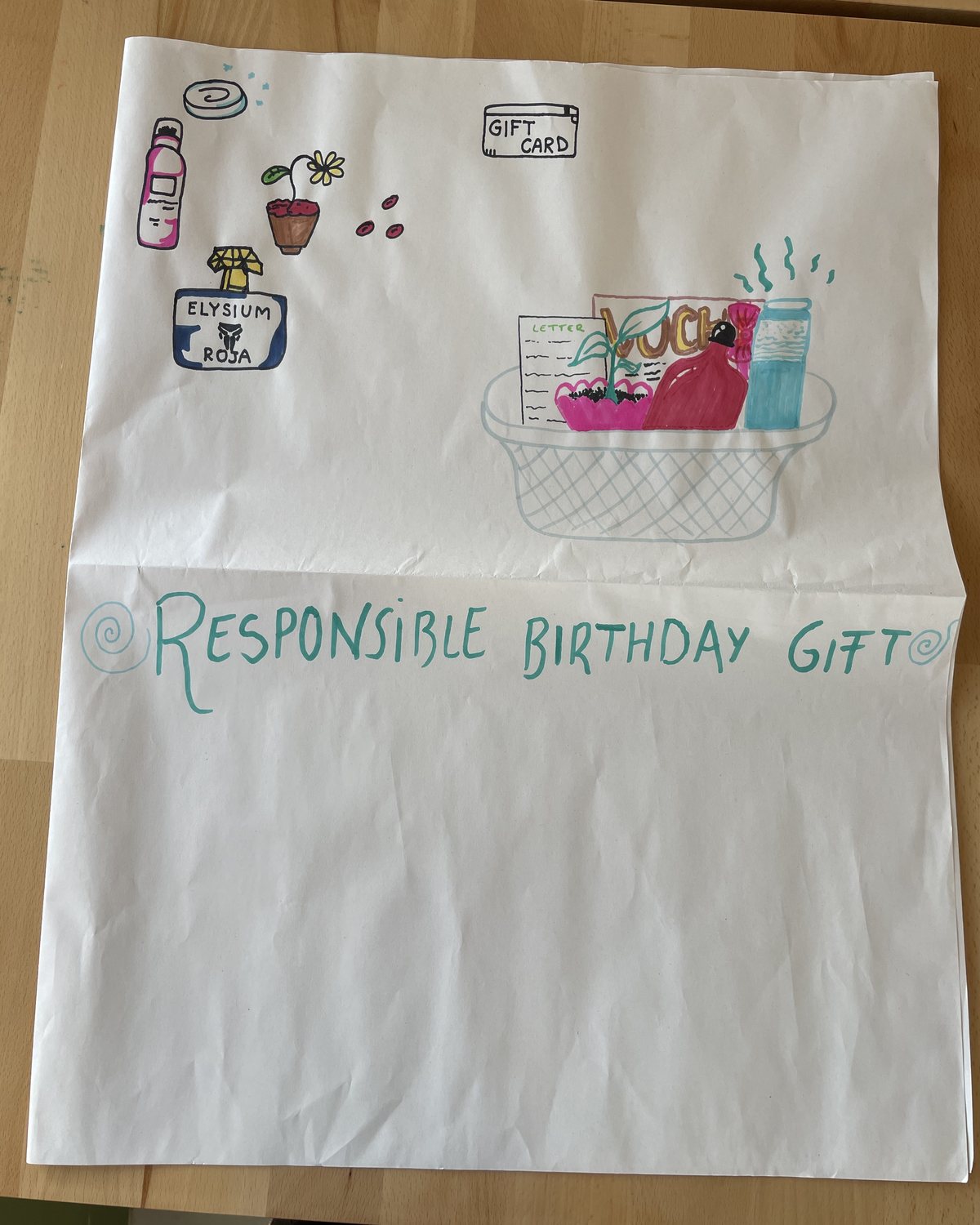
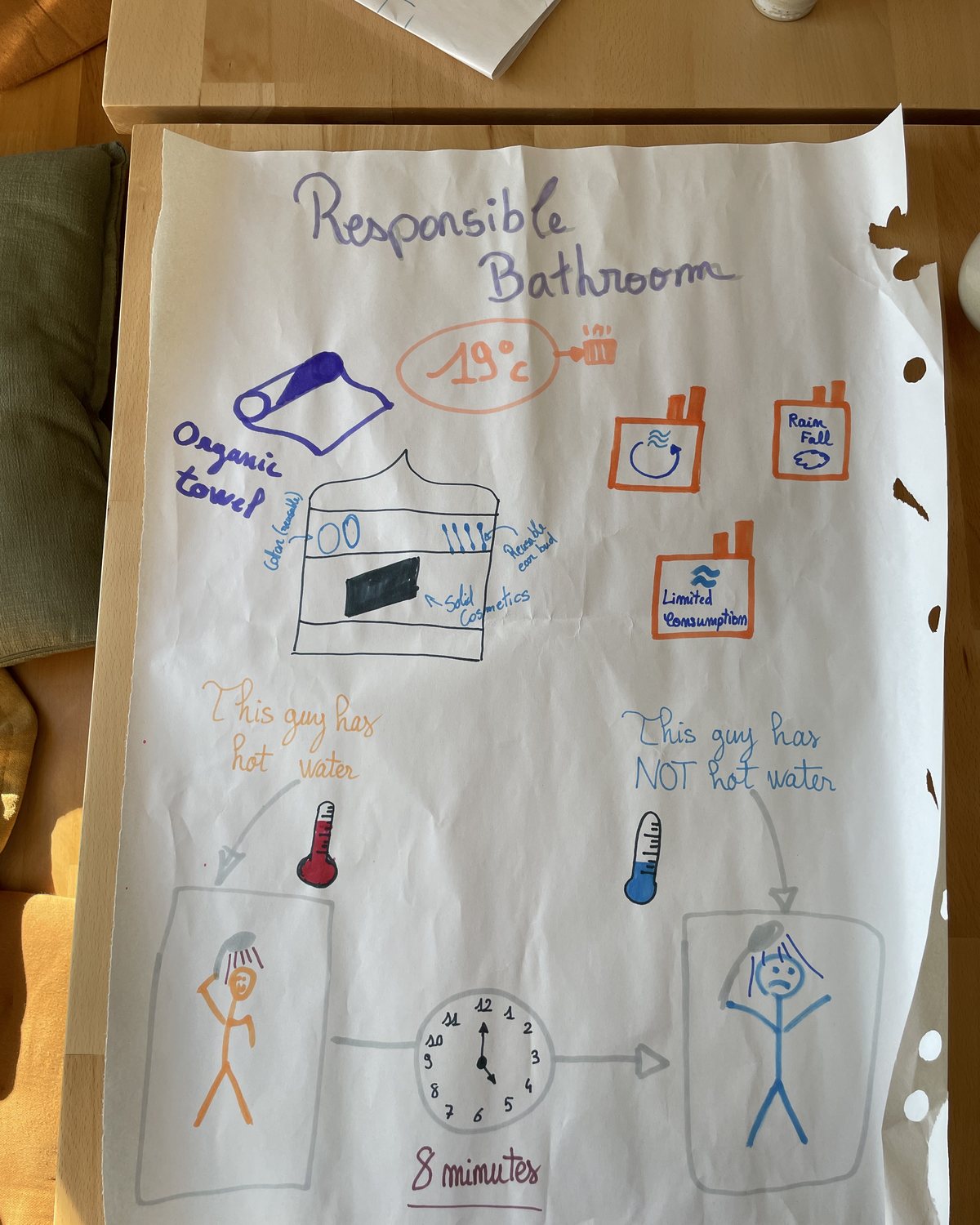
In the Responsible Basket, mixed groups received an everyday situation and had to propose a realistic solution using habits from their own countries. The situations were a dinner with friends, a weekly shop on a small budget, the start of the school year, a birthday gift and a bathroom with a smaller ecological footprint.
The debate asked whether minimalism is the key to responsible consumption. Two teams argued for, two against, and afterwards everyone could say what they really thought. This activity comes from the sheets we wrote for the project, and participants rated it 8.82 out of 10.
A quiz, “Eco-friendly or not?”, scored 8.95. In the role-playing game, also from our activity sheets, participants played consumers, business owners and environmental advocates facing dilemmas such as plastic packaging against cost. It scored 8.05.
Saturday at the market
The seminar ended on Saturday morning at the Dax market, among local producers and their products. It turned out to be the best-rated activity of the three days, with 9.45 out of 10.
Twenty-two of the 25 participants filled in the evaluation. All 22 were satisfied with the organisation, and the average rating across all activities was 8.63 out of 10. One of them wrote: “I really loved travelling around and seeing the culture. That was a different experience from previous projects.”
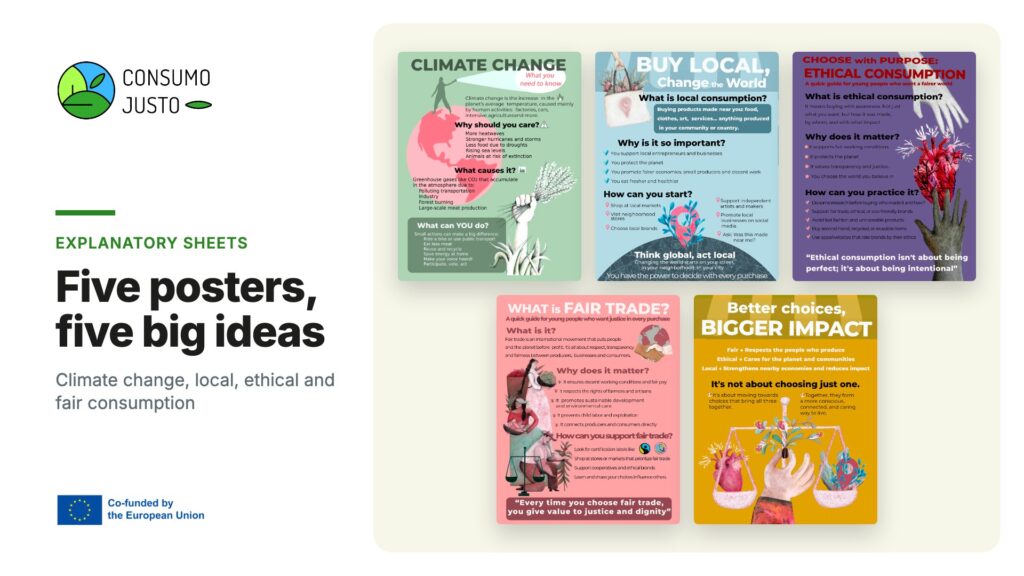
The Consumo Justo app, with the posters, activities and resources described in these posts, is free on Google Play and the App Store.
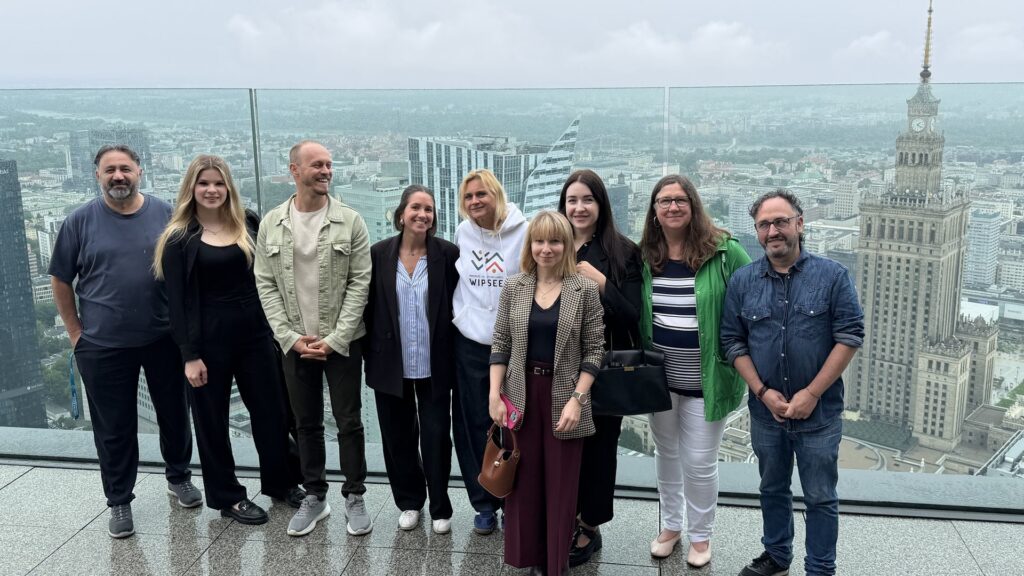
Consumo Justo is an Erasmus+ cooperation partnership in the field of youth (project 2024-1-FR02-KA220-YOU-000248910). Five organisations run it together: Maison de l’Europe des Landes WIPSEE (France, coordinator), SETEM Navarra (Spain), Collective Innovation (Norway), Ecological Future Education (Latvia) and Mobile Adventure (Poland). All posts and results are on our Consumo Justo project page.

Funded by the European Union. Views and opinions expressed are those of the authors only and do not necessarily reflect those of the European Union or the European Education and Culture Executive Agency (EACEA). Neither the European Union nor EACEA can be held responsible for them.
#ConsumoJustoYouth #EUConsumoJusto #ConsumoJustoErasmus