
Consumo Justo timeline · A joint work of the five partners · November 2024 – September 2025
Ask five people what “ethical consumption” means and you will get five answers. That is a problem for Consumo Justo, the Erasmus+ project that trains youth workers to talk with young people about fair, ethical and local consumption. A discussion only works if everyone in the room uses the words in the same way. The project’s explanatory sheets were written to settle that.
From shared definitions to posters
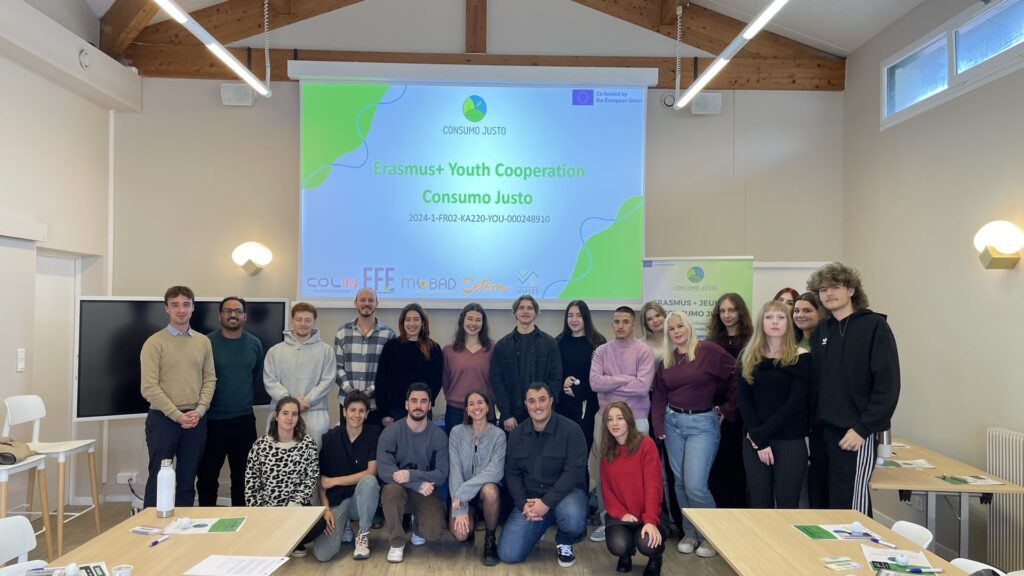
The work started at the partners’ first meeting in Oslo in October 2024. Each of the five organisations wrote down how it defines local, ethical and fair consumption, and the five versions were merged into one glossary. The glossary became five short texts, and SETEM Navarra, our partner in Spain, worked with a designer to turn each text into a poster.
The English versions were completed in summer 2025. By September 2025 they had been translated, and they now exist in six languages: English, French, Spanish, Latvian, Norwegian and Polish.
The five sheets
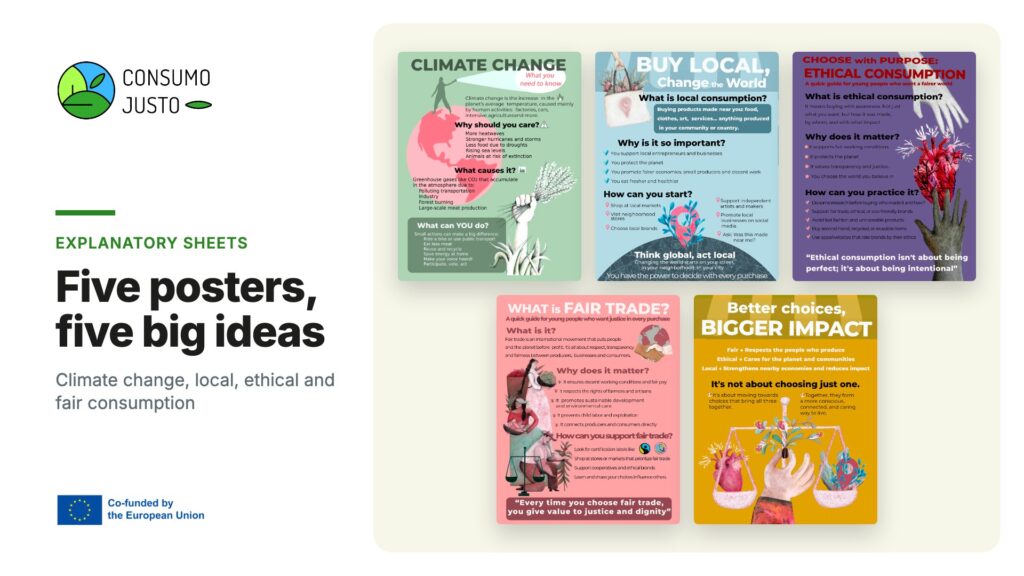
- Climate Change: What you need to know. What it is, what causes it and what one person can do.
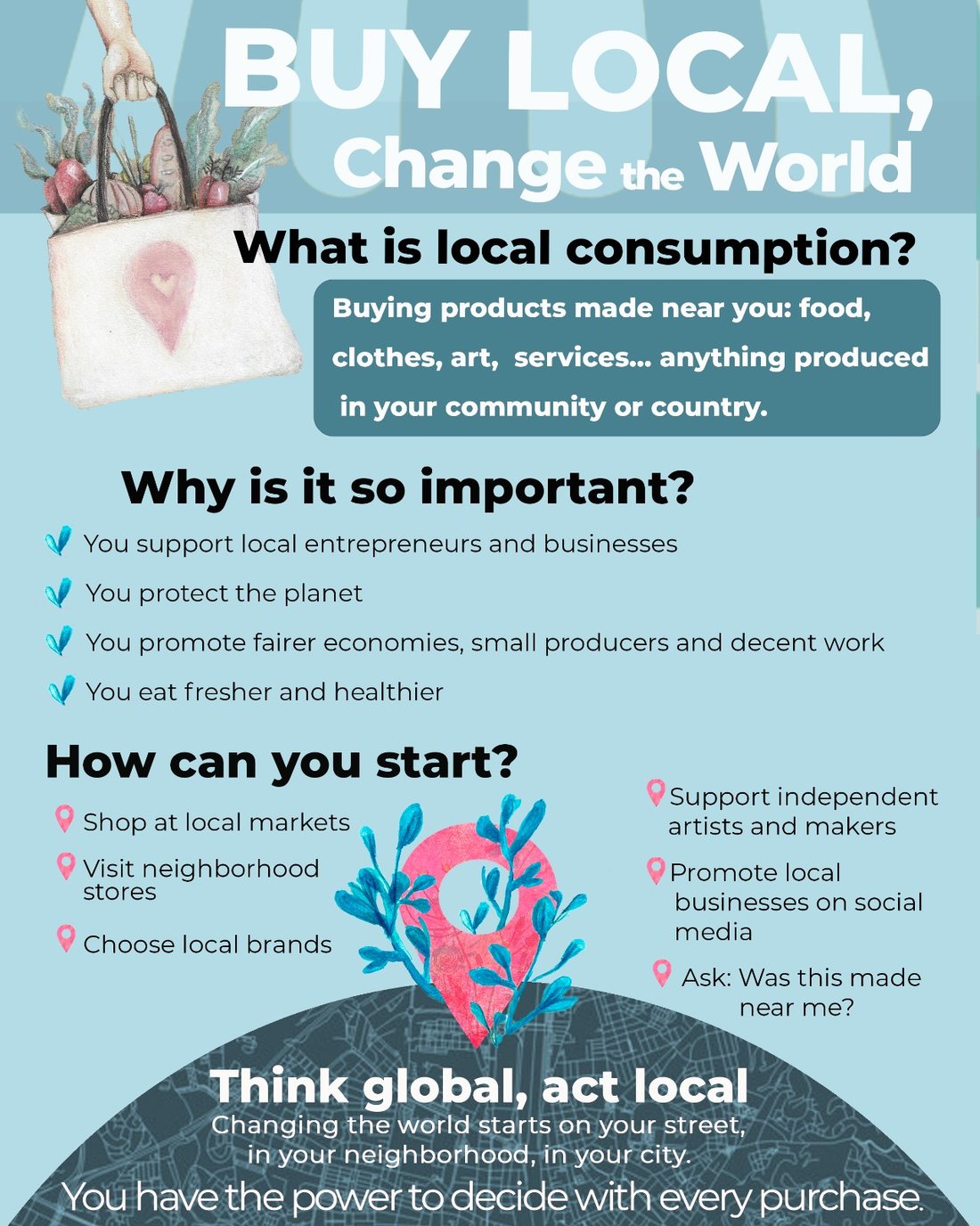
- Buy Local, Change the World. What local consumption means and where to start: markets, neighbourhood shops, local brands.
- Choose with Purpose: Ethical Consumption. Buying with attention to who made a product and under what conditions.
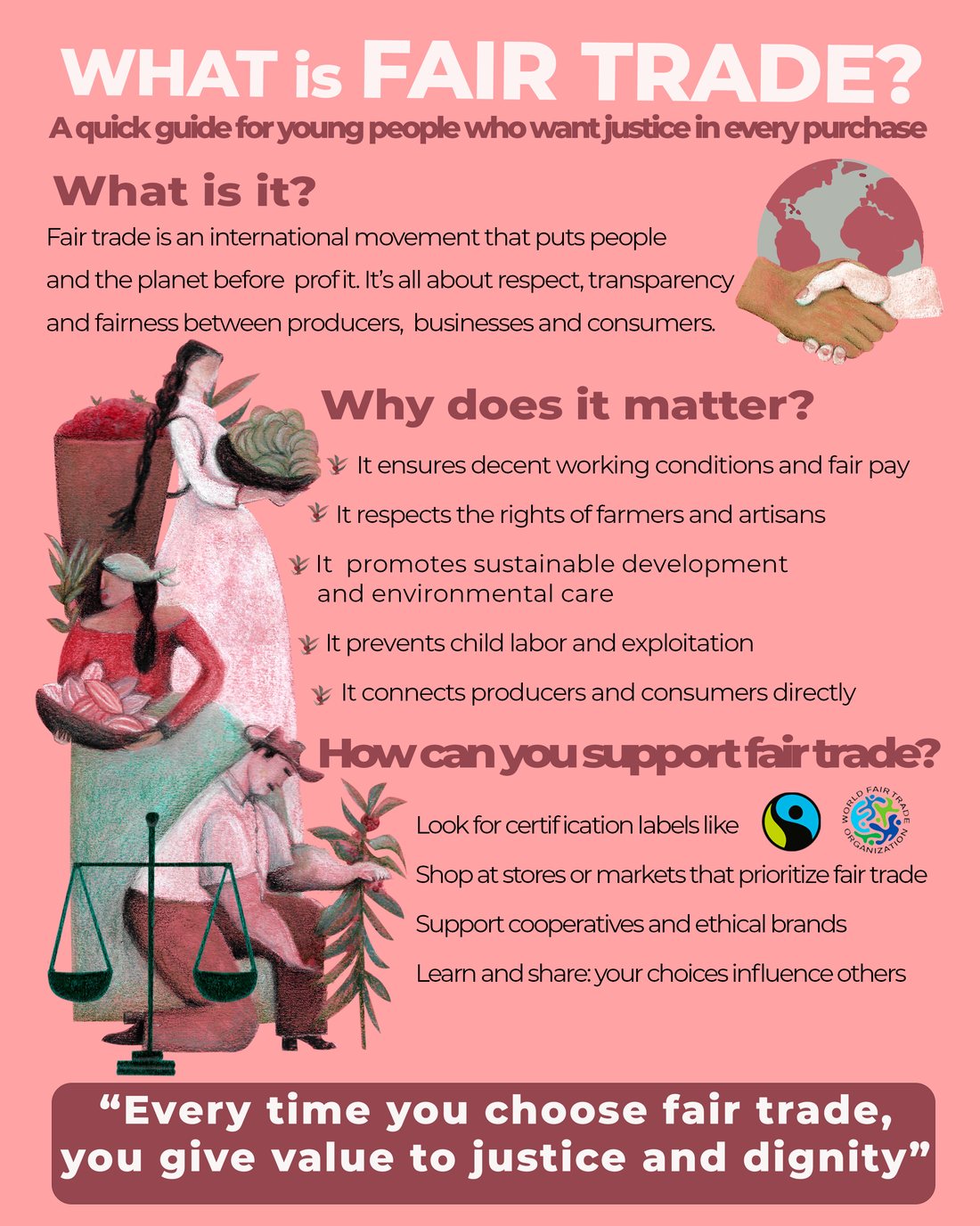
- What is Fair Trade? How fair trade works and how to recognise and support it.
- Better choices, bigger impact. How fair, ethical and local consumption fit together. The poster says it directly: “It’s not about choosing just one.”
Every poster follows the same three questions: what is it, why does it matter, and how can you start. A youth worker can read one in a few minutes and use it to open a discussion.
Good practices to go with them
A definition is easier to remember with an example next to it. Each partner therefore added everyday practices that anyone can copy. Ours include a clothes swap party, an open garage sale, a community garden, homemade fertiliser from banana peels and reusable glass straws.
Where to find them
The sheets and the good practices are in the Consumo Justo mobile app, in the section called Educational resources. The app is free on Google Play and the App Store.
Consumo Justo is an Erasmus+ cooperation partnership in the field of youth (project 2024-1-FR02-KA220-YOU-000248910). Five organisations run it together: Maison de l’Europe des Landes WIPSEE (France, coordinator), SETEM Navarra (Spain), Collective Innovation (Norway), Ecological Future Education (Latvia) and Mobile Adventure (Poland). All posts and results are on our Consumo Justo project page.

Funded by the European Union. Views and opinions expressed are those of the authors only and do not necessarily reflect those of the European Union or the European Education and Culture Executive Agency (EACEA). Neither the European Union nor EACEA can be held responsible for them.
#ConsumoJustoYouth #EUConsumoJusto #ConsumoJustoErasmus