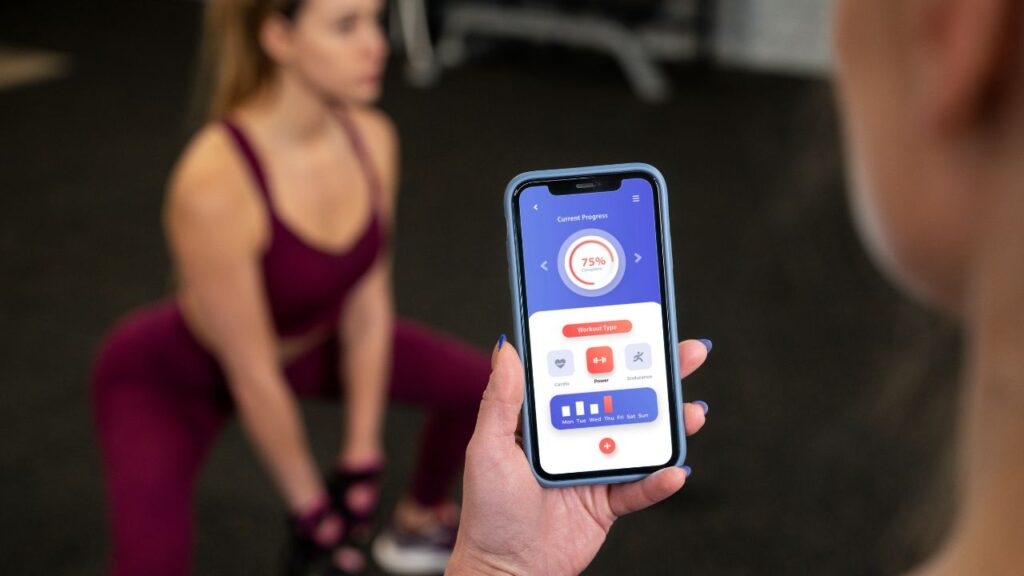

Module 5: VR/AR for Immersive Training introduces the frontier where physical limits meet digital possibilities. While Virtual Reality (VR) and Augmented Reality (AR) often sound like science fiction reserved for gaming, this module demystifies them as practical coaching tools. The curriculum addresses a universal coaching constraint: the physical limit of how much an athlete can practice before fatigue or injury sets in. By adopting the narrative of “Coach Kenji,” the training demonstrates how immersive technology allows for “mental reps,” turning a simple smartphone or headset into a risk-free simulator for high-pressure performance.
The module is structured to guide the learner through the lifecycle of immersive adoption, identifying specific cognitive gains at each stage:
1. The Scenario: The Physical Ceiling
The story begins with Coach Kenji, who is preparing his team for a championship match against an opponent known for an aggressive, high-speed playing style.
- The Trigger: Kenji wants his players to practice defending against this specific high-speed attack.
- The Conflict: He cannot physically replicate the opponent’s speed in practice without risking injury to his own players. Furthermore, his team is already physically exhausted from the season.
- The Barrier: Traditional training has hit a wall. He cannot “drill” them any harder physically, yet they are not mentally prepared for the speed they are about to face.
2. The Application: The Infinite Loop
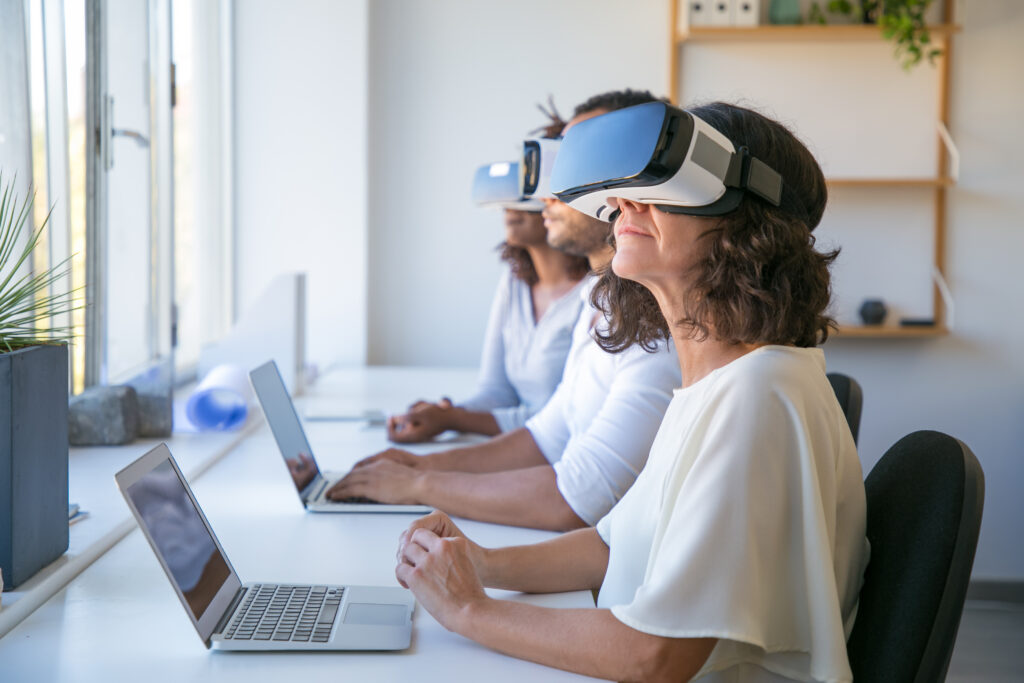
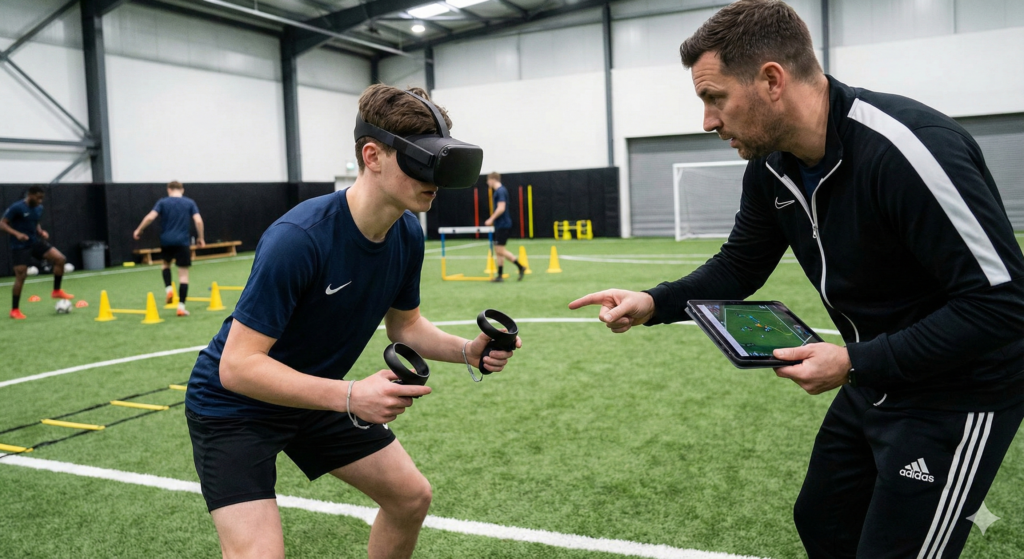
Kenji turns to the Novice and Intermediate strategies from FutureCoach. He utilizes a basic VR setup—inexpensive smartphone viewers—to bridge the gap.
- The Action: He loads 360-degree video footage of the opponent’s plays into the headsets. He invites his players to step into the “Virtual Dojo.”
- The Experience: The players stand still but are visually immersed in the game. They see the attack coming at full speed, over and over again.
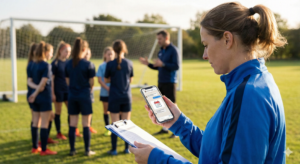
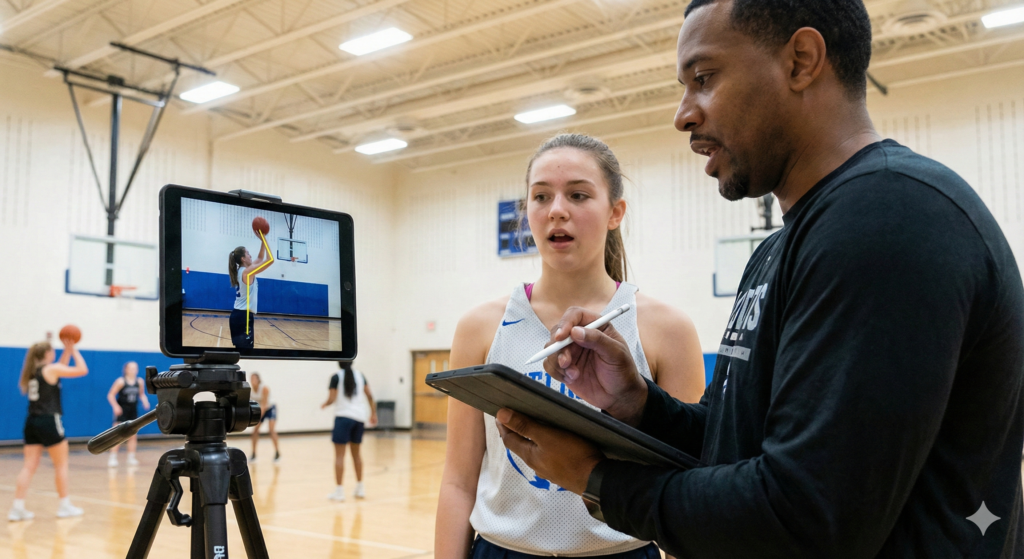
- The Innovation: Kenji uses AR (Augmented Reality) on his tablet to overlay digital tactical lines onto the gym floor, showing players exactly where the “virtual” passing lanes would be.
3. The Outcome: Neuro-Priming
The consequences of this simulation are mental sharpness without physical toll.
- Safe Repetition: The players experience the high-pressure scenario 50 times in 10 minutes without running a single mile. Their brains learn the pattern, but their legs remain fresh.
- Tactical Clarity: By “living” the play in VR, the fear of the unknown vanishes. When the real game starts, the players react faster because they have already “seen” the attack in the simulator.
- Elite Potential: Kenji recognizes the Elite horizon—envisioning a future where AI-driven VR adapts to the player, creating a “Virtual Coach” that pushes them through scenarios too dangerous or complex to set up in real life.
Why This Matters
This module goes beyond novelty to analyze why Immersive Training creates a “Neuro-Advantage.” It emphasizes that VR/AR tools are about “safe, repeatable practice.” As FUTURECOACH surveys highlight, these tools allow novices to mentally rehearse skills without needing full equipment, and elite athletes to visualize racecourses or defensive schemes. The module teaches that the brain often cannot distinguish between a high-fidelity simulation and reality; by exploiting this, a coach can train reaction times and decision-making while the athlete’s body rests.
Comprehensive Implementation Checklist
To prevent the common challenge of “Tech Intimidation,” participants are provided with an actionable checklist to introduce VR/AR gradually.
Step 1: Start Simple (The Novice Entry)
- Use What You Have: Do not buy expensive rigs immediately. Start with a “Cardboard” VR viewer or a smartphone holder to let players experience a 3D video.
- The “Fun” Factor: Introduce the tech as a game or a challenge to spark excitement. Let players see a ball path in 3D or stand in a virtual stadium to overcome the “scary” novelty.
Step 2: Contextualize the Drill (The Intermediate Application)
- Recreate the Scenario: Don’t just watch random videos. Use VR to “play” a recorded scenario specific to your sport (e.g., a penalty kick or a specific play).
- Augment the Reality: Use a free AR app on a tablet to overlay targets or lines on the floor. Give the players a visual target that isn’t physically there.
Step 3: Focus on the Benefit (The Strategy)
- Mental Reps: Use VR specifically when the team is physically tired but needs tactical work. Frame it as “saving their legs” while “training their eyes.”
- Simulate Pressure: Use the immersion to simulate crowd noise or high-stakes moments. Train the athlete’s ability to focus amidst distraction.
Step 4: Scale Carefully (The Elite Vision)
- Assess the Value: Only invest in high-end systems if they solve a specific problem (like analyzing biomechanics via AI).
- Mixed Reality: eventually, aim for setups where players see both real teammates and virtual opponents, bridging the final gap between simulation and reality.
By mastering these steps, coaches unlock a new dimension of training—one where improvement happens even when the physical practice is over.